I was born in Ventura California, and raised in Oxnard, California. Both of my parents were born and raised in MX. Both are Nationalized US Citizens. I am the eldest of two. My sister and I grew up very close. She is 1 year and 2months younger than myself. My husband and I have been in each others lives for 14 years! We've been married for almost 8 years. And we have two beautiful children together, Ethan and Bella Lucia. My most valued treasure is my family and the heritage that they have past down to me and that same heritage that I will pass to my little ones. Our life experiences makes us who we are and qualify us to have platforms in life from where to be heard. And I hope that this platform be one of awareness. I am here to help bring awareness to the life that many have not experinced for themselves. I am here to bring awareness to the people that work closely with aritsans to stock up their small shops. There is a slow fashion movement which I will stand behind and support the best I can. Thank you and welcome to Huipil Life.
Have you heard of a company by the name Alma Guatemalan? They are a company that makes so many different varieties of handbags, wallets, accessories, and they are completely fair trade. The quality of these bags are wonderful. In this world of fair trade its hard to trust what shops are truly in it to benefit and bring someone a stable income and a fair one at that. This is what Angela, Alma Guatemalan’s representative, shared with me and it is also available to read on their webite.
Alma Guatemalan was created from love of travel, Mayan culture and craftsmanship. Our name, Alma, means “soul” in Spanish. With all of our products, we provide to you the truest essence and soul of Guatemala. Upon visiting Guatemala it is easily noticeable the abundance of color and creativity deeply rooted into the country’s culture. Guatemalan artisans work hard at their craft using quality, natural materials.
Founders Tom, Chris and Chad have spent a decade traveling to Guatemala from the United States. With each of their entrepreneurial spirits and years experience in retail they created Alma Guatemalan. In an effort to showcase their crafts and support fair trade practices, the team of travelers have partnered with various artisans to offer bold, colorful bags & accessories. Each of our products are hand-selected in Guatemala then brought to the United States to be shipped to customers. The bags and accessories are made with real leather, huipil, organic cotton and Ixcaco cotton.
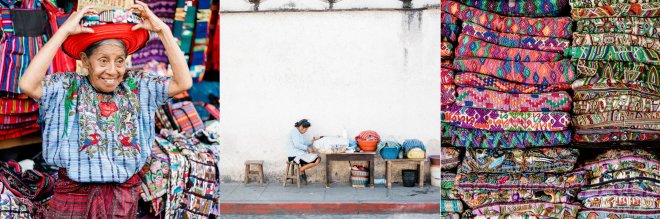
Huipil is a traditional cotton blouse worn by indigenous Mayan women in Guatemala. Hand woven fabric, both new and repurposed, are used with techniques that have been passed down through generations, utilizing bold colors and patterns.
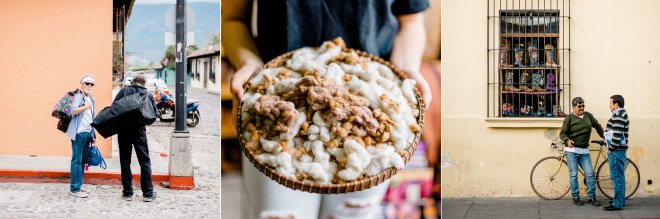
Ixcaco cotton is the brown, organic cotton used in many of our bags. The brown color is the original color of the cotton that was first cultivated by the Mayan people thousands of years ago. It is a short fiber cotton that grows wild in the highlands of Guatemala. It’s name comes from Mayan language describing the color brown or “caco” combined with “Ix” denoting gender identity for women.
Most of the white color cotton used in the design of our bags is dyed to create brilliant color utilizing boiling water and natural ingredients that include berries, tree bark and indigenous plants. It is then hand spun and hand woven with looms including a backstrap loom, one of the oldest forms of looming.
Every purchase of our Mayan crafted bags promote economic development in Guatemala. Each bag is hand-designed by men and women from communities throughout Guatemala. Supporting fair trade practices is important and ensures our suppliers are paid fairly for their time and work. As a result we have developed friendships with the artisans and their families. Each bags design is delicately hand designed and crafted. We know each bag to be of quality and uniqueness, as individual and adventuresome as you.
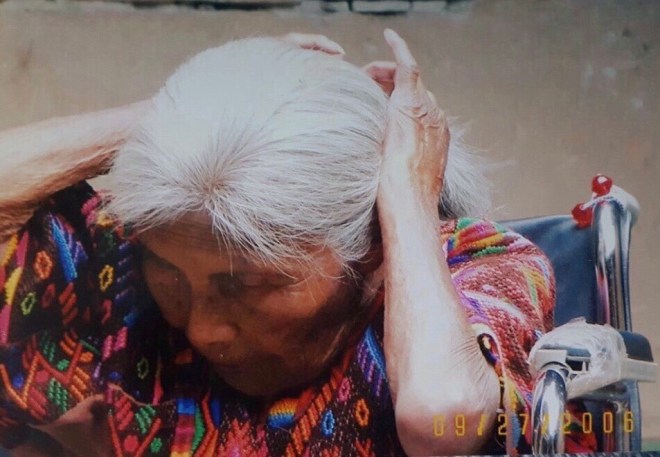
***Edited to add Maya Alí started distributing in the USA in the 90s. Here’s a picture of one of her great grandmothers, Manuela Ventura, who started the company. This picture was taken in 2006. She lived up to be 107 years old! ***
Hello Huipil Life Tribe Readers!
I was so excited to see that Jacqueline had replied to my request! I learned just a smidge of Maya Alí and Co’s history through Jacqueline via email. She is the Head of Operations for Maya Alí and Co. Maya Alí and Co is known for their gorgeous huipil hand bags and accessories. And it gives me great pleasure to share it with you.
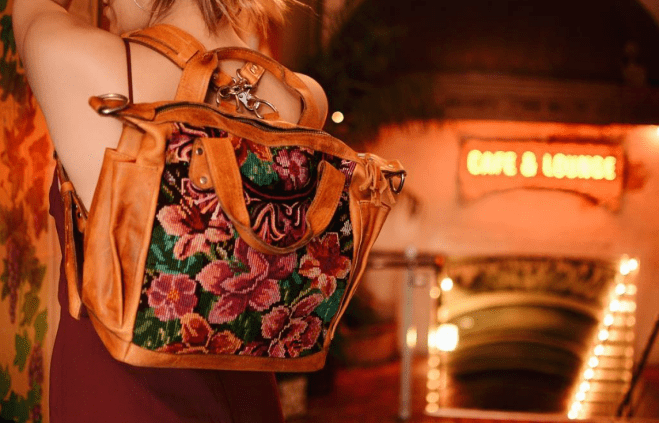
Maya Alí Convertible Day Bag made from tan leather and Chichi huipil.
“Hola Dulce!
That’s really cool! I’m glad you love all things artisanal. As far as our story, wooooooo it’s a very long and sad story that turned into a fun and colorful one. But I’ll try to summarize it as best as possible.
My family and I are all originally from Chichicastenango, Guatemala. My great grandmothers were the ones that started it all in 1920 if not further back. My great grandmothers were both single mothers. And well they had to feed their families somehow. That’s what motivated it all.
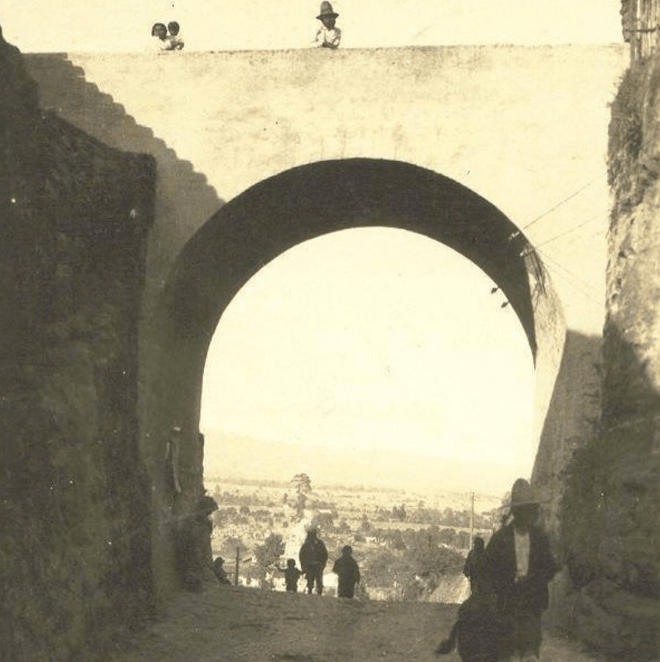
Chichi, Guatemala circa 1920
My great grandmothers lived through the worst times in Guatemala. They lived through the times of the war. When being indigenous meant being a target of extermination. Did you know between the years of the 60s to 70s, many indigenous people were massacred? It’s a very sad long story. But it was the times of the guerilla, when people had become fed up with the government and took a stand against them. A stand that ended in the massacre of many indigenous Guatemalans. Former president, Rios Montt, destroyed so many lives. Lives who were just fighting for a better life. And it wasn’t until recently, a couple of years ago, that he stood trial in Guatemala.
But why am I telling you this? Well, because even through it all, my great grandmothers managed to stay alive, AND keep all their children alive. My parents, and some uncles and aunts being the youngest, were sent out of the country. Fleeing, because kidnappings were happening. They all did come back over time.
But even through all the war, killings, discrimination etc, my great grandmothers, always reminded us to never be ashamed of being indigenous. To never be ashamed of the huipil or corte. To never be ashamed to speak dialect. And to never stop making our handmade goods, because through them we told stories. Even if it meant persecution. It is who we are. And so as years passed and generations have passed, even now in my generation, we take pride in carrying this day, 100% indigenous blood. 90% of my family still wear the huipil and corte, and still speak dialect, even my mother and father.
Maya Alí has been around for generations, the reason why we’re not huge like other companies online is, well to be honest, because my family isn’t really the computer online generation. Unlike my generation, we’re able to navigate easily through it. And it wasn’t until our generation that we entered the online world. But we’ve been around, for generations. My great grandmothers were the ones that started it all, and over the years we have continued it in our own way, modifying when needed to make our products better.
We work side by side with artisans, mainly because a lot of them are our family or family friends or people who once knew or knew of, our great grandmothers. Practically all the artisans we work with, we know. Which makes it even more fun and amazing! We try to use the best materials possible to give our customers quality products. As our grandmothers always said, quality over quantity.
Over the years, we always get asked two questions:
1. A lot of people ask us if we work with cooperatives, we don’t. Reason is, as I’m sure you know cooperatives work with locals helping them and showing them new techniques etc. But what about the Guatemalans who aren’t locals but instead live deep in Guatemala, where there’s no water, light, where their houses are built out of clay? Over the years as we’ve gotten bigger, we decided to expand, and meet new artisans, some of which are artisans that live deep in Guatemala.
We love that there’s cooperatives helping, it’s amazing! We just work with people who can’t be part of these cooperatives, either because they have no transportation, don’t have anyone to leave their children with, or there’s no roads! (we actually just worked with a woman whose only transportation is a boat, because there are no roads). But we also do this because our great grandmothers once asked us, if we were one day to expand, to expand in the rural areas of Guatemala, places where there’s too much poverty. Places that many didn’t know existed, but that they knew existed because it’s where they were born, and where they saw poverty first hand. And so, as we grew, we did as they wished. Today we work with family, friends, town locals, and new friends and people who live in aldeas, which are small communities deep in Guatemala.
2. We also get asked what sets us apart from other companies? Well first off, we love that there’s so many companies helping Guatemala! But as far as what sets us apart, I would say we’re indigenous, and we know a lot of truths about Guatemala.
Above all we are a simple group of family and friends that love Guatemala, and have continued making artisanal goods because its tells our story and our ancestors stories. Stories that we feel need to be heard by the world. Today, I’m head of all operations, and work closely with everyone. I try to always keep in mind what my grandmothers taught us. I try to keep it real and authentic, as it’s what my grandmothers always told us to do. We just started working with other parts of the country, mainly because it was always one of my grandmothers dreams. She always told us to never view anyone any different, that we were all the same. No matter their race or religion.
I run a group on FB that allows for small shops to promote their inventory and sell in the group. I’d like to share with you the stories behind the shops and pictures of their artisans. I am looking for shops that I can completely stand behind and promote. From their customer service etiquette, to the way they promote themselves, show their character as a business owner. I hope to share as many shops as I have the pleasure of interviewing. Today I’m starting off with Maria’s Artisan Shop.
I came across Maria’s shop in October of 2017. I was interested in a Zunil wristlet she had for sale. She had the most attentive customer service and I was hooked. Good customer service goes a very long way in my book. I began looking into her other items and found that she sold artisan made earrings from Colombia. And I was hooked. I inquired about several pairs and purchased several pairs of earrings. I was so in love with the handiwork. These earrings were made in Medellin Colombia, and because I had just finished watching the latest season of Narco, I felt connected somehow lol. But really seriously I loved the fact that I could contribute bringing income to someone so far away. So I asked Maria recently to give me a little information about herself and her drive to continue in the artisan made business. Here is what she had to share with me.
” It all honestly became a gradual thing for me. It went from having a hobby to opening my own shop. I focused on making sure I gave value to the work put in, learning about the depth of the culture it comes from. Viewing articles and meeting more sources exposed me to more truths. It’s kind of become a gradual thing like with you. We both kinda grew into this together lol. I’ve also always been a fair person. With everyone in any situation as best as I could when I saw needed. Recognizing someone’s hard work into their craft is very important to me. I grew up from a hard-working family. My mother worked nights in Canary to care for my family and my dad worked all day. He just retired at age 76. My appreciation for their hard work didn’t come till later in life. And I wish I appreciated them since I was younger. But maybe it was the seed planted for me to appreciate everyone’s hard work. And now, as I’ve come across fair trade and ethical business, I’ve learned to value the real meaning behind those words and how loaded these claims are. Their heart and soul goes into these works. Their family history. And a tradition that with time and later in the newer generations they tend to dwindle. I want to make sure the huipil I buy has my permission to be used for these bags and accessories, because they are special and some are spiritual. I want them to know I am thankful. I want them to know I am not taking advantage of their art or just putting on a show. Yes it is a business that I want to thrive but I want those that are creating to thrive as well…..gosh I’m so all over the place here Amiga. I just know I’m growing here. I’m still learning. And most importantly I want to do it all the right way. I’ve learned so much in the last 7 months of my business start. And I look forward to the day I get to travel to Guatemala. And I’m thankful that I haven’t gone yet. Because the eyes I will go in with now will know and recognize and understand more than 7 months ago….and I can only imagine how much more powerful my mission will be after my visit.
I want to give the artisans their voice and recognition. To acknowledge what they do and the art they create. We forget how much a simple thank you and acknowledging ones work can also enlighten ones soul and brighten our day. As for fair trade, there’s so much being taken advantage of. One would gloat for haggling down to a good deal. But what they did is devalued the time and dedication this craftsman or craftswoman put into their work. It sends a message, this work is not worth the money. And they take away from the provision of food to their table. We as humans don’t want to be devalued, so why should we do that to one another? I don’t want to be part of that, I want to be part of what is truly ethical.
The latest item I added to my shop was from a Yabal cooperative that weaved the Quiewi fabric. Queiwi works with local artisans to make amazing products. With each purchase the customer helps give back to Casa Guatemala’s education fund. It really is part of the slow and feel good fashion. “
That’s what I want to know I am a part of as a consumer. It’s not about making a “clique” on FB. I want to bring awareness to the shops that care more about putting food on someone elses table. You have to be in it because you love it. If you do it only for the money, you make crucial mistakes and burn out. Because the money will never be enough. You have to believe in what you do. Thank you Maria and thank you the reader for engaging in María’s Artisan Shop Blog.
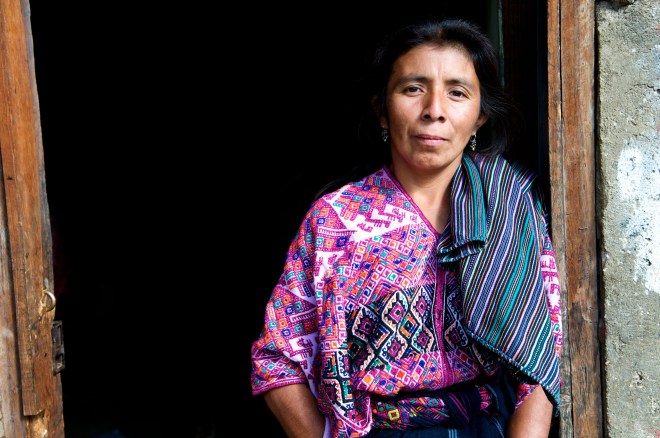
If you don’t already know, Huipil is the most common traditional garment worn by indigenous women from Central Mexico to Central America. It is a loose-fitting tunic, generally made from two or three rectangular pieces of fabric which are then joined together with stitching, ribbons or fabric strips, with an opening for the head and, if the sides are sewn, openings for the arms. Traditional huipiles, especially ceremonial ones, are usually made with fabric woven on a back strap loom and are heavily decorated with designs woven into the fabric, embroidery, ribbons, lace and more. However, some huipiles are also made from commercial fabric.
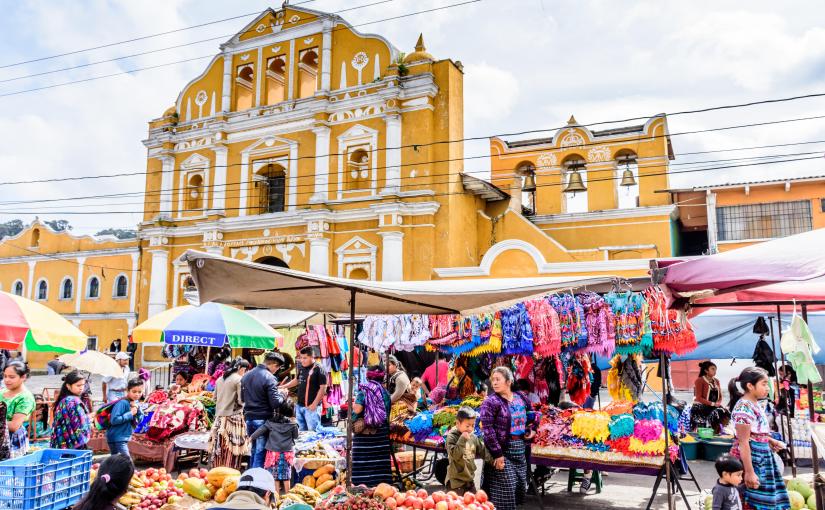
In particular the Huipil from Guatemala has been an inspiration all over the world. It has inspired so many people to rediscover and repurpose a national treasure. Huipil is more than a garment. Huipil is Life. In it people find greetings to one another. They tell a story of where a person is from. Each region in Guatemala has its own style of huipil. Inspiration for the huipil comes from environmental surroundings and spiritual beliefs. Huipil is very unique. It holds, not only, 1,200 years of tradition, it also holds the key to the Mayan culture. It can tell you something about a womans interests, her family, her marital status, her social status, her religion, and her beliefs. Did you know that the common sun or chevron collar on a huipil symbolizes marital status? It is woven into a huipil to represent they are married that they have their SUN, the LOVE of their life! Only when her husband dies is the sun neckline removed. So if your bag has a sun neckline, understand that it is a sense of pride and honor. It is most commonly found in red or orange because those colors are bright and shinning.
Did you know that men will work a foot-loom, but women and only women will work a back strap loom? That’s because the loom relies on a back and forth motion of the hips in order to create the correct tension on the threads. That swaying is considered to be a wholly female motion, associated with childbirth, making back strap weaving a women-only activity. In fact, some Mayan legends even credit the moon goddess as the first backstrap weaver.
Because huipil take so long to make, huipiles are considered very valuable and are often one of the most expensive items a Mayan family owns. The good news is their construction can last for years, although some women will have a few different huipiles for different occasions in their lifetimes.
Huipil in Guatemela is a source of income. It used to be that these garments were made to dress themselves and to identify themselves by region. However, the slow fashion movement has begun also a mass sourcing movement. And although we are bringing a source of income for these women weavers it is now more crucial to understand and respect its true value. Where we see pretty colors and designs, Mayan women see their handiwork, tradition, and heritage. Those things are priceless. But in this day in age, everything has a price. There was a time they never would have thought to sell these beautiful, important, and sometimes sacred garments. However, the need to provide financially weighs heavily.
So now that you have been given a little insight as to what a huipil is and what it means to Mayan women and their communities, let me ask you the following. What is your family trade if you have one? What is your hobby? What is it that you do, that you love more than anything else in the world? What if you found yourself in a situation that forced you to sell that very thing, in order to survive? Do you sell it? Do you sell it for pesos when you know it will be sold for dollars? Do you sell it so that you can put food on your table? Even if you know that the person who bought it is only seeing dollars signs? How would you feel about this? This is just a glimpse of what some of these women are feeling. Please be responsible consumers. Dig a little deeper. Keep your favorite company accountable to their own claims. It is only fair that if these Mayan women and their families, who find themselves forced to give up huipil which is precious to them, that they in return be paid fairly. Huipil is not just a textile. Huipil is color. Huipil is Life.
Good company in a journey makes the way seem shorter. — Izaak Walton
Welcome! I am so excited to begin this journey. I have so much to share and I can’t wait to share it all with you. And most of all to promote shops that work directly with artisans Latino America. Thank you for this opportunity to start this journey. I was born in Ventura California, and raised in Oxnard, California. Both of my parents were born and raised in MX. Both are Nationalized US Citizens. I am the eldest of two. My sister and I grew up very close. She is 1 year and 2months younger than myself. My husband and I have been in each others lives for 14 years! We’ve been married for almost 8 years. And we have two beautiful children together, Ethan and Bella Lucia. My most valued treasure is my family and the heritage that they have past down to me and that same heritage that I will pass to my little ones. Our life experiences makes us who we are and qualify us to have platforms in life from where to be heard. And I hope that this platform be one of awareness. I am here to help bring awareness to the life that many have not experinced for themselves. I am here to bring awareness to the people that work closely with aritsans to stock up their small shops. Thank you for following. This is Huipil Life.



 Huipil Life Tribe