
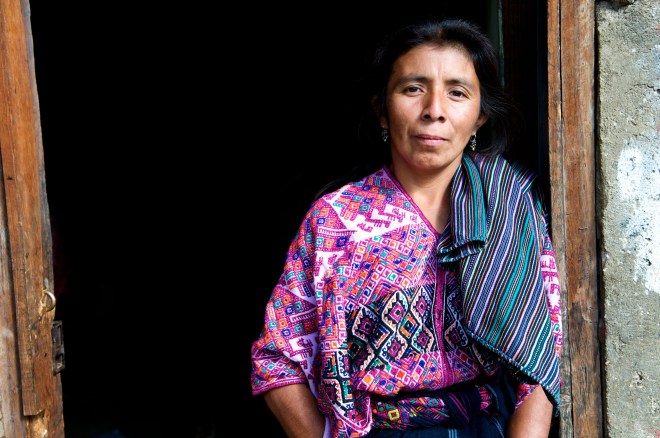
If you don’t already know, Huipil is the most common traditional garment worn by indigenous women from Central Mexico to Central America. It is a loose-fitting tunic, generally made from two or three rectangular pieces of fabric which are then joined together with stitching, ribbons or fabric strips, with an opening for the head and, if the sides are sewn, openings for the arms. Traditional huipiles, especially ceremonial ones, are usually made with fabric woven on a back strap loom and are heavily decorated with designs woven into the fabric, embroidery, ribbons, lace and more. However, some huipiles are also made from commercial fabric.
In particular the Huipil from Guatemala has been an inspiration all over the world. It has inspired so many people to rediscover and repurpose a national treasure. Huipil is more than a garment. Huipil is Life. In it people find greetings to one another. They tell a story of where a person is from. Each region in Guatemala has its own style of huipil. Inspiration for the huipil comes from environmental surroundings and spiritual beliefs. Huipil is very unique. It holds, not only, 1,200 years of tradition, it also holds the key to the Mayan culture. It can tell you something about a womans interests, her family, her marital status, her social status, her religion, and her beliefs. Did you know that the common sun or chevron collar on a huipil symbolizes marital status? It is woven into a huipil to represent they are married that they have their SUN, the LOVE of their life! Only when her husband dies is the sun neckline removed. So if your bag has a sun neckline, understand that it is a sense of pride and honor. It is most commonly found in red or orange because those colors are bright and shinning.
Did you know that men will work a foot-loom, but women and only women will work a back strap loom? That’s because the loom relies on a back and forth motion of the hips in order to create the correct tension on the threads. That swaying is considered to be a wholly female motion, associated with childbirth, making back strap weaving a women-only activity. In fact, some Mayan legends even credit the moon goddess as the first backstrap weaver.
Because huipil take so long to make, huipiles are considered very valuable and are often one of the most expensive items a Mayan family owns. The good news is their construction can last for years, although some women will have a few different huipiles for different occasions in their lifetimes.
Huipil in Guatemela is a source of income. It used to be that these garments were made to dress themselves and to identify themselves by region. However, the slow fashion movement has begun also a mass sourcing movement. And although we are bringing a source of income for these women weavers it is now more crucial to understand and respect its true value. Where we see pretty colors and designs, Mayan women see their handiwork, tradition, and heritage. Those things are priceless. But in this day in age, everything has a price. There was a time they never would have thought to sell these beautiful, important, and sometimes sacred garments. However, the need to provide financially weighs heavily.
So now that you have been given a little insight as to what a huipil is and what it means to Mayan women and their communities, let me ask you the following. What is your family trade if you have one? What is your hobby? What is it that you do, that you love more than anything else in the world? What if you found yourself in a situation that forced you to sell that very thing, in order to survive? Do you sell it? Do you sell it for pesos when you know it will be sold for dollars? Do you sell it so that you can put food on your table? Even if you know that the person who bought it is only seeing dollars signs? How would you feel about this? This is just a glimpse of what some of these women are feeling. Please be responsible consumers. Dig a little deeper. Keep your favorite company accountable to their own claims. It is only fair that if these Mayan women and their families, who find themselves forced to give up huipil which is precious to them, that they in return be paid fairly. Huipil is not just a textile. Huipil is color. Huipil is Life.
 Huipil Life Tribe